
Choosing the wrong SEO tools does not just waste your budget; it quietly kills your rankings while your competitors pull ahead. With hundreds of platforms flooding the market, knowing which ones actually deliver measurable returns has never been more critical.
This guide cuts through the noise. We have rigorously evaluated and ranked the best SEO marketing tools available in 2026, using return on investment as the primary filter. Not features. Not popularity. Actual business impact.
Whether you are optimizing technical infrastructure, building authoritative backlinks, or fine-tuning your content strategy, the tools you choose will directly shape your results. As someone with a working knowledge of SEO fundamentals, you already understand that not every tool deserves a spot in your stack.
What you will find here is a carefully curated listicle covering the platforms that consistently outperform the competition in real-world conditions. Each entry includes a breakdown of core strengths, ideal use cases, and why it earns its place based on ROI. By the end, you will have a clear, confident roadmap for building a smarter, leaner, and more effective SEO toolkit this year.
Why Most SEO Tool Lists Cannot Be Trusted
Most "best SEO tools" articles you find at the top of search results share a common problem: they are built around affiliate commissions, not objective analysis. SEO affiliate programs routinely offer 30% recurring monthly commissions, flat fees up to $200 per referred sale, and cookie windows stretching up to 365 days. The economic incentive is clear, and it shapes which tools get featured, how they are scored, and which limitations never get mentioned. When a blogger earns more for recommending one platform over another, the recommendation stops being analysis and becomes advertising.
This is not a fringe issue. Search Engine Land's December 2025 evaluation guide explicitly flagged affiliate bias and budget traps as the primary failure mode in how marketers assess SEO tools today. The analysis noted that most platforms still emphasize keyword tracking and visibility metrics rather than revenue attribution, making it genuinely difficult to justify tool costs in a board meeting or business review. Readers rarely catch this gap because the framing sounds objective, even when it is not.
A finance and growth consulting lens reframes the evaluation entirely. Instead of vague "feature richness" scores, the relevant criteria become cost-per-insight, funnel integration, and measurable revenue attribution. These are the same filters applied to any capital allocation decision. According to First Page Sage, SEO delivers an average three-year ROI of approximately 748%, but that figure only holds when the right stack is connected to proper measurement systems. Without attribution, even strong traffic gains remain invisible in revenue terms.
This list evaluates tools the way a growth consultant evaluates any investment: does it compound over time, does it produce data tied to actual decisions, and does the cost justify a demonstrable, trackable return?
How to Evaluate an SEO Tool Stack: 4 Questions That Matter
Before spending a dollar on any SEO platform, apply this four-question framework. It filters out tools that look impressive in demos but deliver little in practice, and it aligns your stack directly with the phases of a compounding growth system.
Question 1: Does It Feed Your Funnel Diagnostics?
A tool earns its place in your stack by surfacing information that drives your audit phase. That means keyword gaps showing where your funnel loses organic traffic, crawl errors and indexing issues that suppress visibility, and competitive positioning data that reveals where rivals are outranking you and why. In 2026, this diagnostic layer also extends to AI SERP intelligence, specifically how large language models answer prompts related to your category and which sources they cite. Evaluating SEO tools through a business-impact lens rather than a feature checklist is what separates strategic stacks from expensive subscriptions. If a tool cannot directly inform a decision about your funnel, it is not earning its seat at the table.
Question 2: Can It Integrate With an AI-Assisted Production Workflow?
Siloed platforms are an efficiency liability. The more useful question is whether a tool can export structured data, keyword clusters, content gaps, SERP insights, into a ChatGPT or Claude workflow where that data becomes the input for briefs, outlines, and optimisation decisions. Revenue-focused SEO stacks in 2026 consistently prioritise tools that connect cleanly with AI production layers rather than those that attempt to replace them with generic built-in writing features. Custom AI workflows built on real data outperform one-click content generation every time.
Question 3: Does It Produce Data You Can Tie to Revenue?
Rankings and impressions are intermediate metrics. If you cannot translate organic traffic data into pipeline contribution or revenue estimates, you cannot justify the budget to a leadership team or make confident scaling decisions. Blending SEO analytics with CRM and attribution data is increasingly the standard for growth-oriented teams, and tools that support this connection, whether through native integrations or clean data exports, are materially more valuable than those that stop at organic clicks.
Question 4: What Does It Actually Cost Per Actionable Insight?
Monthly pricing is the wrong unit of measurement. A platform at $140 per month that generates five strategic decisions per week, prioritised content opportunities, technical fixes with estimated traffic impact, and competitive signals, costs a fraction of a $30 tool that nobody opens. Evaluate total cost against the number of decisions the tool actually drives. Factor in the time saved through automation and the quality of support when something breaks. Test tools against real workflow tasks, not sales demos. Avoid stacking platforms with overlapping functionality; focused stacks produce better output with less noise.
This framework maps directly to a four-phase growth approach: diagnose funnels, audit issues, build AI-assisted production systems, and measure compounding returns across a six to thirty-six month horizon. Every tool in your stack should serve at least one of those phases explicitly.
Google Search Console: The Non-Negotiable Free Baseline
Google Search Console is the only SEO tool that pulls data directly from Google's own index, making it the most accurate source available for impressions, click-through rates, average position, and crawl error reporting on your site. Unlike third-party platforms that estimate your visibility through sampled data, GSC shows you exactly what Google sees. That distinction matters significantly when you are diagnosing underperformance or validating whether a fix has taken effect.
The Performance report surfaces which queries are driving traffic to specific pages, allowing you to identify high-impression, low-CTR opportunities where title and meta improvements can deliver quick wins. The Page Indexing report flags which URLs are excluded from Google's index and explains why, whether due to 404 errors, canonical conflicts, or server issues. The Core Web Vitals report uses real Chrome user data to identify pages falling below the LCP, INP, and CLS thresholds that influence ranking signals. All of this is available without paying anything.
The limitations are real but predictable. GSC provides no competitor data, caps historical performance data at 16 months, and offers no keyword volume estimates. These gaps are why it anchors a well-built stack rather than completing it. Pair it with paid tools for competitive intelligence; rely on it for ground-truth validation.
For any business beginning SEO measurement, GSC is the correct first tool. Even inside a full agency-grade stack, it remains essential because it confirms what Google actually registers, independent of what third-party crawlers estimate. As Studio Hawk's introduction to GSC reinforces, it is consistently the foundation serious practitioners return to for data integrity.
In 2026, its structured data and mobile usability reports carry added relevance. Schema errors flagged inside GSC directly affect rich result eligibility, and mobile usability issues influence how content surfaces in AI Overviews and generative search experiences. This makes GSC quietly useful for early GEO auditing, giving you a structured starting point for generative visibility before investing in dedicated AI search tracking tools.
Semrush: The All-in-One Leader for Research and Competitor Intelligence
Semrush has earned its reputation as the default starting point for serious SEO practitioners, and in 2026 that position is more defensible than ever. The platform consolidates keyword research, competitor gap analysis, site audits, backlink tracking, rank monitoring, and content optimization into a single interface, eliminating the workflow friction that comes from bouncing between four or five separate tools. For growth marketers and consultants, that consolidation is not just convenient; it directly reduces the time cost of running regular research cycles.
The 2026 feature set reflects where search is actually heading. Semrush's AI Visibility Toolkit, included in higher-tier plans, tracks how a brand appears across generative search environments including Google AI Overviews and ChatGPT responses, measuring citations, share of voice, and sentiment across prompts. This is a direct and well-timed response to AI search traffic growing by more than 500% in 2025. The platform also expanded its keyword clustering capabilities through the Keyword Strategy Builder, using intent-based and SERP-similarity grouping to build structured content architectures rather than isolated keyword targets. These are not cosmetic additions; they address a genuine shift in how visibility is measured and won.
Pricing starts at approximately $140 per month, which places Semrush firmly in the mid-to-high investment tier. That cost is well justified when you are actively running keyword research, competitor analysis, site audits, and rank tracking simultaneously. When a team is using three or more feature sets in parallel, the platform's value per dollar is genuinely strong. The calculus shifts for businesses that log in once a month to check rankings; at that usage level, the subscription cost is difficult to justify against the return.
Multiple 2026 reviews consistently position Semrush as the top all-in-one platform for agencies and consultants managing multiple clients, and the platform's depth makes it particularly valuable for integrated audit workflows that require moving between research, technical review, and content optimization without switching tools. For in-house teams that need one platform to own the full SEO workflow, or for consultants building repeatable systems across client accounts, the investment compounds over time as the data accumulates and comparative benchmarks become richer.
Honest cost-to-value verdict: Semrush delivers high value for users running regular keyword and competitor workflows where insights translate directly into content decisions and technical fixes. For businesses that treat SEO as a monthly checkbox rather than an active growth channel, a lighter and less expensive tool will serve the actual usage pattern better.
Ahrefs: Backlink Authority and Keyword Data Quality

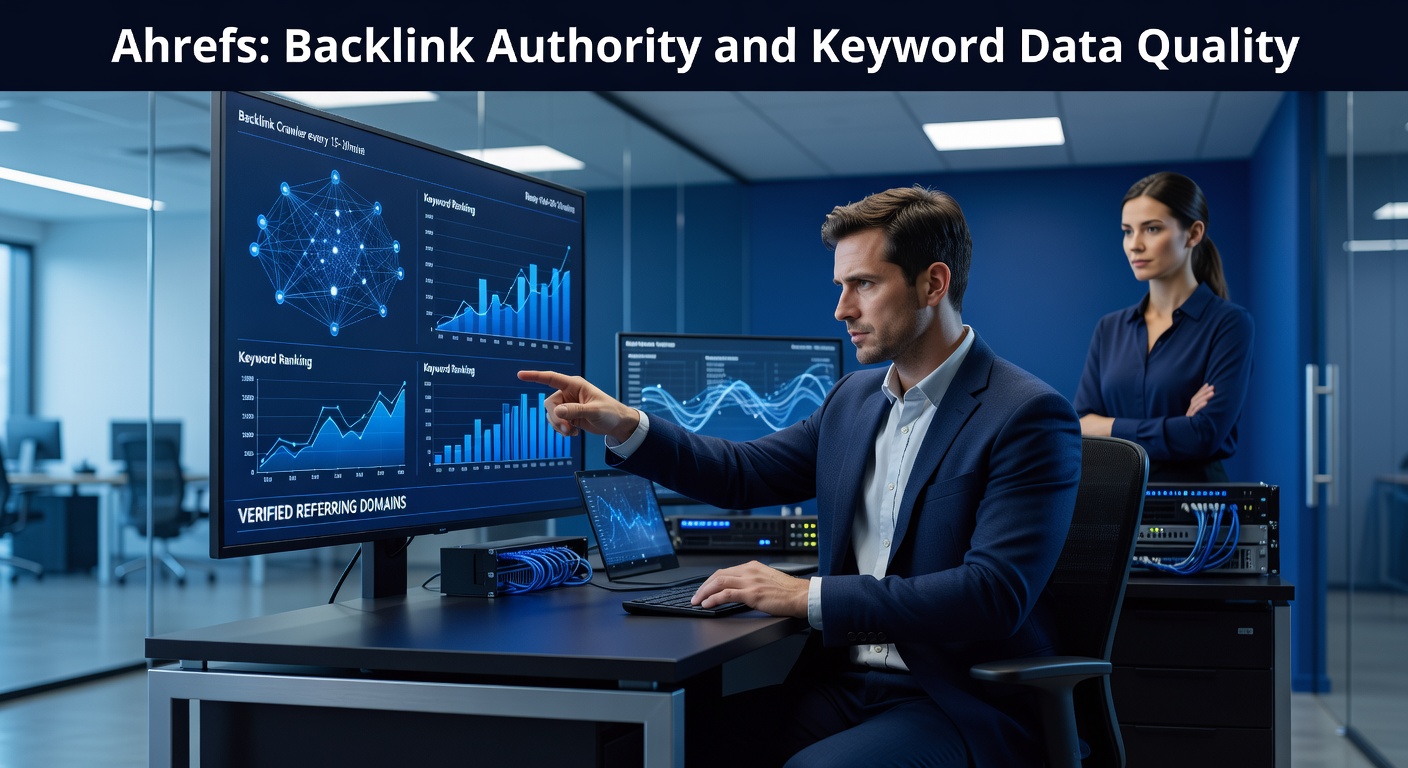
Among all commercial SEO tools, Ahrefs holds a consistent lead in one critical area: the quality of its underlying data. Its backlink index, built from a crawler that processes updates every 15 to 30 minutes, is widely regarded as the most accurate available for identifying verified referring domains, detecting new links quickly, and flagging lost links before they distort your analysis. Independent comparisons consistently show Ahrefs surfacing unique backlink data faster than alternatives, often 24 to 48 hours ahead. When a campaign decision hinges on whether a link is live or dead, that freshness matters significantly. For practitioners where data precision is non-negotiable, Ahrefs is the default choice.
The platform's keyword research capabilities carry the same standard of accuracy. Keyword Difficulty scores in Ahrefs correlate closely with actual SERP outcomes because they factor in the real backlink profiles of ranking pages rather than using simplified proxies. Traffic Potential estimates give a more honest picture of opportunity than raw search volume alone. These are the kinds of metrics that hold up when you move from planning to execution.
The Brand Radar feature, launched in 2025, adds a layer that is increasingly relevant as zero-click search behavior reshapes how visibility is measured. It tracks brand mentions and citation velocity across AI-generated content surfaces including ChatGPT, Perplexity, Google AI Overviews, and Gemini, as well as platforms like Reddit and YouTube. With roughly 70% of searches now zero-click, knowing where and how your brand is being cited in AI answers is directly actionable intelligence for an answer engine optimization strategy.
Pricing starts at $129 per month for the Lite plan, with a lower entry-level Starter option introduced in early 2026. The cost sits closely in line with comparable all-in-one platforms, but the interface skews technical. Users without existing SEO fluency will find the data density overwhelming rather than useful. Ahrefs rewards practitioners who know what they are looking for and can build their own reporting layers on top of raw exports.
For competitive research, the Content Gap and Link Intersect tools are particularly strong, enabling large-scale identification of keyword opportunities your competitors rank for and link prospects your site is missing. This makes Ahrefs the natural fit for SEO consultants, agencies, and in-house teams who prioritise research depth and link-building workflows over broad marketing suites.
Surfer SEO: On-Page and Content Optimisation at Scale
Surfer SEO occupies a distinct position in the 2026 tool landscape by solving a specific and measurable problem: how do you know whether a piece of content is genuinely optimised for its target keyword? The platform answers that question by pulling the current top-ranking pages for a given search term and reverse-engineering what they have in common. Word count, heading structure, NLP entity usage, term frequency, paragraph length and image count are all benchmarked against the competitive field, producing a real-time Content Score that updates as you write. This removes the guesswork from on-page optimisation and replaces it with a data-driven target that reflects what is already working in the SERP.
What makes Surfer particularly relevant in 2026 is how cleanly it fits into AI-assisted production workflows. Content briefs generated inside the platform carry keyword clustering data, recommended term lists and structural guidance that translate directly into prompts for ChatGPT or Claude. The workflow that experienced content teams are running looks like this: Surfer handles research, brief generation and scoring criteria, a large language model produces the first draft using those inputs, and a human editor refines for brand voice, factual accuracy and editorial quality. This three-stage process compresses what would previously take days into a significantly shorter cycle without sacrificing on-page rigour.
Pricing sits between approximately $99 and $219 per month depending on the plan tier, with GEO and AI search optimisation features reserved for higher plans. This is a meaningful consideration given that roughly 70% of searches in 2026 are zero-click, meaning optimising purely for traditional rankings is no longer sufficient. Higher-tier access to AI visibility tracking, which monitors whether content is being cited across AI search surfaces like Perplexity and ChatGPT, adds a layer of strategic value that aligns with where search behaviour is heading.
Surfer is best suited to content-led growth strategies where publishing velocity compounds over time. B2B businesses producing regular educational content or thought leadership pieces benefit most directly, because consistent use of high content scores across a content programme creates a measurable correlation with ranking performance. It functions most effectively as a specialist layer within a broader stack rather than a standalone solution.
Screaming Frog: Technical Audit Depth You Cannot Replicate for Free
Screaming Frog operates differently from every other tool covered in this list. Rather than running in a browser tab on a remote server, it installs directly on your machine and crawls your site the same way Googlebot does, giving you granular control and export depth that cloud-based audit tools simply cannot match at any comparable price point.
A single crawl surfaces broken links, redirect chains, duplicate content flagged via MD5 hash checks, missing or duplicate meta tags, canonical conflicts, page depth issues, and orphaned pages sitting outside your internal link structure. For technically complex sites, JavaScript-heavy frameworks, or post-migration audits, this level of detail is not a luxury; it is the difference between diagnosing the real problem and guessing at it.
The free version crawls up to 500 URLs per session, which covers most small business and landing page audits without requiring a single dollar of investment. When you move to the paid licence, priced at approximately $259 USD per year (under $22 per month), the 500-URL ceiling disappears entirely. One licence covers unlimited sites, making it disproportionately cost-effective for consultants and agencies running audits across multiple clients simultaneously.
Within a structured growth system, Screaming Frog belongs firmly in the diagnostic and audit phase. Before committing budget to content production or link acquisition, it identifies crawl budget waste from low-value pages consuming Googlebot's attention, structural issues blocking indexation, and architectural problems that would otherwise undermine every upstream investment.
Its API integrations with Google Search Console, Google Analytics, and PageSpeed Insights allow you to overlay real performance data directly onto crawl exports. You can see which technically broken pages are also receiving impressions, or which slow-loading URLs are ranking despite poor Core Web Vitals scores, combining technical and performance signals in a single exportable dataset.
This tool is best deployed by consultants running initial site audits, agencies onboarding new clients, and any business that suspects technical debt is capping organic growth before more visible strategies are considered.
ChatGPT and Claude: The AI Production Layer Every Stack Needs
Neither ChatGPT nor Claude qualify as SEO tools in the traditional sense. They have no native keyword database, cannot crawl your site, and do not track rankings. What they do provide is something equally critical: a high-throughput production layer that connects raw SEO data to publishable content at a speed and cost structure that transforms what a consistent publishing program can achieve.
The practical workflow is specific and repeatable. Export keyword clusters, SERP data, and competitor content gaps from Semrush or Ahrefs. Feed that structured data into Claude or ChatGPT using well-designed prompts to generate content briefs, full outlines, meta title and description variations, topic cluster maps, or schema markup drafts. Take that output into Surfer SEO for on-page scoring and optimisation alignment. Then apply human editorial review to calibrate brand voice, verify factual accuracy, and embed genuine E-E-A-T signals before publication. Claude tends to outperform for deep analysis, long-form briefs, and structured audit outputs given its extended context window. ChatGPT handles high-volume ideation and rapid meta variation efficiently. Used together, they cover the full production spectrum.
The compounding effect is where the financial case becomes concrete. AI-assisted production meaningfully reduces time-per-article across research, outlining, and initial drafting. Sustained over a 12 to 24 month publishing program, that efficiency translates directly into content volume and domain authority accumulation. This is precisely the mechanism behind the 748% three-year SEO ROI benchmark: consistent, compounding content output that AI makes operationally viable rather than aspirational.
The critical risk deserves direct attention. AI-generated content published without editorial oversight produces generic, shallow output that ranks poorly and actively undermines authority-building. Google's helpful content systems are calibrated to surface useful, original content and demote undifferentiated material at scale. Most businesses that attempt AI SEO shortcuts fail at exactly this point.
At approximately $20 per month each for ChatGPT Plus and Claude Pro, the AI layer represents one of the strongest ROI line items in any stack when used systematically inside a structured workflow rather than sporadically for one-off prompts.
Rank Tracking and Value Translation: Nightwatch and Morningscore
By 2026, basic rank tracking is a commodity. Every serious SEO platform includes it, and any tool that only shows you a position number without context is delivering diminishing value. What separates Nightwatch and Morningscore from generic rank trackers is their shared emphasis on translating raw position data into business language, specifically estimated monetary value.
Morningscore does this through its proprietary SEO Score, which converts your organic rankings, traffic estimates, and visibility metrics into a dollar figure representing what that same traffic would cost through paid search. The calculation draws on Google Ads CPC data and search volume to assign a concrete value to your organic presence. For growth marketers who regularly face the question "what is SEO actually worth to us," this feature directly closes the measurement gap. Rather than presenting a CFO with average position improvements, you can present the paid-traffic equivalent your rankings are generating for free.
Nightwatch approaches value translation differently, emphasising hyper-granular location-based tracking that is particularly relevant for Australian businesses. National ranking averages are often misleading when your customers search in specific Sydney suburbs or Melbourne postcodes. Nightwatch tracks rankings at city, suburb, and postcode level across more than 100,000 locations globally, giving local and regional businesses an accurate picture rather than aggregated data that obscures actual performance.
Both tools enter the stack at under $100 per month on entry-level plans, positioning them as focused additions rather than replacements for full research platforms like those covered earlier in this list. The strongest use cases are consultants building client-facing dashboards, internal teams creating SEO accountability systems, and any marketer who needs to defend organic investment to finance stakeholders using revenue-equivalent metrics rather than ranking tables.
Free Technical Essentials Worth Keeping in Every Stack
Three free tools deserve a permanent place in every SEO stack, regardless of what paid platforms you are running alongside them. They are not substitutes for comprehensive research or competitive analysis tools, but they fill precise diagnostic gaps that paid suites often handle less cleanly.
Google PageSpeed Insights delivers Core Web Vitals data pulled directly from real user sessions via the Chrome User Experience Report, combined with Lighthouse lab diagnostics. It reports on Largest Contentful Paint, Interaction to Next Paint, and Cumulative Layout Shift, with prioritised, actionable recommendations attached to each issue. Core Web Vitals remain a confirmed Google ranking factor, and the tool is updated to reflect current scoring methodology, including the full transition from First Input Delay to INP. Running monthly checks takes less than ten minutes and gives you a reliable trend line on performance health across your key URLs.
Rich Results Test validates your structured data markup against Google-supported schemas including HowTo, Product, Article, and others. It flags missing required properties, identifies eligibility issues, and directly confirms whether your markup qualifies for enhanced SERP features and generative search citation formatting. Quarterly reviews, or validation after any schema changes, catch implementation errors that broader paid crawlers sometimes surface with less precision.
AnswerThePublic maps question-based and conversational keyword variations around any seed term. With approximately 70% of searches now zero-click and AI-driven queries skewing heavily toward natural language, identifying exact phrasing patterns is a genuine strategic input, not a secondary research step.
The common mistake is treating these tools as optional additions reviewed once and forgotten. Building them into a regular audit cadence, monthly PageSpeed checks, quarterly structured data reviews, and ongoing AnswerThePublic ideation sessions, produces compounding technical improvements without adding a dollar to your monthly tool spend.
Recommended SEO Tool Stack Combinations by Growth Stage
Knowing which tools to buy matters far less than knowing which combination to buy at your current stage of growth. The sections above have covered each tool individually. What follows is how they fit together into deliberate, cost-justified stacks aligned to where your business actually sits.
Budget Stack: Under $200 Per Month
For early-stage businesses establishing their organic foundation, this combination covers all four functional layers without redundancy. Google Search Console provides free performance data, crawl error alerts, and indexed page visibility. Screaming Frog's paid licence handles unlimited technical auditing, identifying broken links, redirect chains, duplicate content, and structural issues that no cloud tool catches with the same precision. Surfer SEO's Starter plan adds content scoring and on-page optimisation against live competitors. ChatGPT rounds out the stack with AI-assisted content production, brief generation, and ideation. The total sits comfortably under $200 per month, and there are no meaningful gaps for a business publishing consistently and building its technical foundation from scratch.
Mid-Tier Growth Stack: $300 to $400 Per Month
This combination suits content-led B2B businesses that have resolved their core technical issues and are now competing for search visibility at scale. Ahrefs provides the highest-quality backlink and keyword data available at this price point, making it the right anchor for research-heavy operations. Surfer SEO handles content optimisation across every piece published. Screaming Frog remains in the stack because technical debt compounds quickly during rapid content growth, and monthly crawls catch issues before they affect rankings. Claude Pro replaces or supplements ChatGPT here because its longer context window and editorial precision make it better suited to producing polished long-form B2B content efficiently. This stack delivers competitive intelligence and content quality without the overhead of a full agency retainer.
Full Consultant or Agency Stack: $500 or More Per Month
At this level, the stack adds Semrush as the primary research and reporting platform, layering competitor intelligence, AI-driven insights, and client-ready reporting on top of the tools below it. Nightwatch provides rank tracking with monetary value translation and the location-level segmentation that Semrush's native tracker lacks for granular campaigns. Surfer and Screaming Frog continue in their defined roles. An AI layer, whether Claude, ChatGPT, or integrated AI features within Semrush, handles production volume and brief automation across clients or content programmes.
Matching Stack to Growth Phase, Not Budget
The most common mistake in tool selection is treating it as a purely financial decision. A business with crawl errors, thin pages, and broken internal linking will extract almost no value from a $140 per month keyword research platform because it lacks the content infrastructure to act on what that platform surfaces. Screaming Frog at a fraction of the cost solves the actual bottleneck. Stack selection should follow a simple diagnostic: identify the constraint in your funnel, then buy the tool that removes it.
Australian B2B businesses face one additional configuration requirement that most tools do not handle by default. Suburb- and city-level rank tracking for markets like Sydney or Melbourne requires deliberate setup within Nightwatch or equivalent tools, as most platforms default to national or US-centric data. Similarly, GSC performance segmented by Australian queries and locations must be configured manually using filters, not assumed. These steps take minutes to implement but make a significant difference in whether your data reflects what local buyers are actually seeing.
The ROI Reality Check: Connecting Tool Costs to Revenue
SEO delivers positive ROI within 6 to 12 months of implementation for most businesses running consistent, strategic campaigns. The compounding effect becomes most pronounced in years two and three, where organic traffic gains accumulate without proportional cost increases. However, that compounding return only materialises in your reporting if the measurement infrastructure exists to capture and attribute it accurately. Without that layer, you are generating value you cannot see, defend to stakeholders, or reinvest intelligently.
The diagnostic question every intermediate marketer should be able to answer is this: what is your organic traffic worth in dollar terms this month versus last month? If your current tool stack cannot produce that number, the gap is not in your keyword research capability or your content optimisation workflow. The gap is in measurement. Sophisticated research tools generate insights; measurement tools convert those insights into defensible commercial outcomes. Both are necessary, and most stacks are built with only the former.
The attribution model does not need to be complicated to be useful. Multiply your monthly organic sessions by your average conversion rate, then multiply that figure by your average deal or order value. The resulting number represents estimated monthly organic revenue. Divide total SEO tool spend plus content production costs into that figure, and you have a working return multiple you can track month over month. Integrating Google Analytics 4 with your CRM adds precision, but even a spreadsheet-based version of this model is substantially more useful than reporting position changes alone.
The numbers support sustained investment when you run them properly. The recommended mid-tier stack across the tools covered in this list runs approximately $350 per month, or $4,200 annually. Against a median three-year SEO ROI of 748%, the structural case for ongoing investment is sound for any B2B business operating with meaningful deal values. Tools represent only a fraction of total SEO programme costs, with content production typically comprising the larger share.
For businesses that want a structured starting point, a stack ROI calculator template mapping tool costs to traffic value and projected compounding returns is available as a free resource in the site resources section.
GEO and AI Search: What It Means for Your Tool Selection in 2026
The operating environment for SEO in 2026 is not trending toward AI influence; it has already arrived. Approximately 70% of searches are now zero-click, resolved directly in the SERP through AI Overviews, featured snippets, and knowledge panels before a user ever reaches your site. AI search usage grew over 500% in 2025, and platforms like Google AI Overviews, Perplexity, and ChatGPT are now active referral sources for many sites. These are current conditions, not forecasts, and any tool stack built purely around traditional click-through metrics is already operating with a blind spot.
The practical implication for tool selection is targeted rather than sweeping. Semrush's AI Visibility Toolkit tracks how your brand appears across generative search outputs, including ChatGPT, Gemini, and Google AI Mode, pulling from a database of hundreds of millions of prompts. Ahrefs' Brand Radar performs a comparable function, monitoring brand citations and share-of-voice across six or more AI platforms while integrating directly with Ahrefs' existing keyword and backlink data. Both treat AI visibility as a signal alongside traditional rank tracking rather than a replacement for it, which reflects the correct framing. Neither tool requires a platform change if you are already running Semrush or Ahrefs as your core research stack.
Structured data validation deserves specific mention in this context. Generative engines preferentially cite content that is well-structured, clearly attributed, and machine-readable. Running key pages through Google's Rich Results Test, a free tool, validates that your schema markup is error-free and eligible for rich result features. This is non-trivial work with measurable GEO implications, and it costs nothing beyond time.
The strategic principle that ties this together is layering, not overhauling. Traditional SEO fundamentals, including keyword research, technical site health, on-page optimisation, and measurement, remain the foundation that GEO performance builds on. Brands that appear frequently in AI-generated answers are almost always producing authoritative, well-structured content that already ranks well organically. Avoid investing in standalone GEO platforms or major upgrades until your foundational stack is delivering consistent, measurable results and your business has the content publishing capacity to act on the additional data these tools surface.
Building an SEO Stack That Compounds Over Time
The best SEO marketing tools are not the ones with the most features or the highest affiliate commissions. They are the ones your team will actively use, can connect directly to revenue data, and can integrate into a repeatable production workflow that compounds over time.
Build your stack in deliberate phases. Start with Google Search Console and Screaming Frog to establish a clean technical baseline before spending anything on paid platforms. Add a research platform like Ahrefs or Semrush only when your content production capacity is ready to act on the keyword data those tools surface. Then layer in Surfer SEO and an AI-assisted production workflow to scale output quality without proportionally scaling costs. Each phase builds on the last, creating a system that grows more efficient as it matures.
Measure your stack ROI quarterly. Translate organic traffic into an estimated dollar value using assisted conversions or average order value from GA4, then compare that figure against your total tool subscriptions and production costs. This single habit separates businesses that compound SEO returns from those that cycle through platforms without ever seeing meaningful results.
The global SEO software market is projected to reach approximately $96 billion in 2026, growing at roughly 13% annually. That scale reflects enormous demand, but it does not guarantee returns for the businesses spending within it. The businesses that win are not the ones with the largest tool budgets; they are the ones that build the most disciplined systems around a focused stack.
For B2B businesses and consultants looking to build a custom stack integrated into a full growth system covering funnel diagnostics, AI-assisted content production, and marketing measurement, a dedicated stack audit is the logical next step. Free resources, templates, and consultation options are available at anthonyligyat.com.
Frequently Asked Questions About SEO Tools
What is the best SEO tool for beginners on a tight budget?
For beginners on a tight budget, the ideal starting stack costs under $200 per month and covers all essential functions. Begin with Google Search Console, which is completely free and provides direct data from Google's index. Add Screaming Frog's paid licence at roughly $22 per month for unlimited technical auditing, Surfer SEO's Starter plan for on-page content optimisation, and ChatGPT at $20 per month for AI-assisted content production. This combination addresses technical health, content quality, and performance measurement without redundancy or unnecessary overhead.
How do I know if my current SEO tool stack is actually delivering a return on investment?
The simplest way to measure your stack's ROI is to calculate estimated monthly organic revenue by multiplying your monthly organic sessions by your average conversion rate and then by your average deal or order value. Divide your total SEO tool spend plus content production costs into that figure to get a working return multiple. If your current tools cannot help you produce this number, the gap is in measurement, not research capability. Integrating Google Analytics 4 with your CRM adds precision, but even a basic spreadsheet model is far more useful than reporting on position changes alone.
How are AI tools like ChatGPT and Claude used effectively in an SEO workflow?
ChatGPT and Claude function as high-throughput production layers rather than standalone SEO tools. The effective workflow involves exporting keyword clusters, SERP data, and content gaps from platforms like Semrush or Ahrefs, then feeding that structured data into Claude or ChatGPT using well-designed prompts to generate briefs, outlines, meta descriptions, and schema markup drafts. The output then goes into Surfer SEO for on-page scoring, followed by human editorial review for brand voice and factual accuracy. Claude performs better for deep analysis and long-form B2B content, while ChatGPT excels at high-volume ideation and rapid variations. Without human editorial oversight, AI-generated content risks being generic and shallow, which actively undermines authority-building.
What does the shift to AI search and zero-click results mean for the tools I should be using in 2026?
With approximately 70% of searches now zero-click and AI search usage having grown over 500% in 2025, tool stacks built purely around traditional click-through metrics already have a significant blind spot. Practically, this means prioritising tools with AI visibility features. Semrush's AI Visibility Toolkit and Ahrefs' Brand Radar both track how your brand is cited across generative search platforms like Google AI Overviews, ChatGPT, and Perplexity. Additionally, validating structured data markup using Google's free Rich Results Test helps ensure your content is machine-readable and eligible for citation in AI-generated answers. The key principle is layering these capabilities onto a strong foundational stack rather than overhauling your entire approach.
Should I choose Semrush or Ahrefs as my primary SEO research platform?
The choice depends on your primary use case. Ahrefs is the stronger option when data precision is the priority, particularly for backlink analysis and keyword research, as its crawler updates every 15 to 30 minutes and its Keyword Difficulty scores correlate closely with real SERP outcomes. It suits consultants, agencies, and teams focused on competitive research and link-building workflows. Semrush is the better choice for teams that need a single platform covering keyword research, competitor gap analysis, site audits, rank tracking, and content optimisation in one interface, with the added benefit of its AI Visibility Toolkit for generative search tracking on higher-tier plans. Both platforms start at approximately $129 to $140 per month, so the decision should hinge on whether your primary need is data depth or workflow consolidation.
Conclusion
The right SEO tools do not just improve your rankings; they compound your results over time and create a measurable competitive advantage. Here are the key takeaways to carry forward.
First, ROI should always outweigh feature count when evaluating any platform. Second, a leaner, well-chosen stack consistently outperforms a bloated one. Third, technical, content, and link-building tools each serve distinct functions and work best when selected intentionally.
Now it is time to act. Audit your current tool stack against the rankings in this guide, identify the gaps costing you visibility, and make strategic replacements where the data points.
Your competitors are already investing in smarter tools. The question is whether you will move first. Start with one high-ROI swap this week and let the results prove the case for everything that follows.